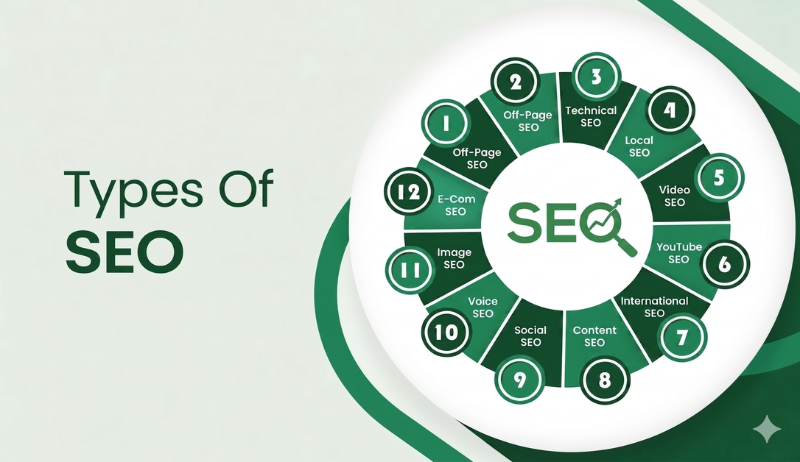
Search Engine Optimization (SEO) is a collection of strategies and techniques aimed at increasing a website’s visibility and ranking in search engine results. But when you dive deeper into SEO, you encounter several specialized branches, each targeting a different aspect of your digital presence. In this guide by The Digitor, we cover all major SEO types in detail, explaining what they are, their key elements, and why they matter for your business.
Types of SEO at a Glance
Type of SEO
Description
On-Page SEO
Optimizing individual web pages to improve rankings and attract relevant traffic.
Off-Page SEO
Building authority and trust through external signals like backlinks and brand mentions.
Technical SEO
Optimizing the backend infrastructure so search engines can crawl and index your site efficiently.
Local SEO
Targeting customers in specific geographic locations through local search optimization.
E-Commerce SEO
Optimizing online stores to improve product visibility and drive more sales.
Video SEO
Optimizing video content to rank higher in Google and YouTube search results.
Image SEO
Optimizing website images for better visibility in image search results.
International SEO
Optimizing a website for audiences across different countries and languages.
Voice Search SEO
Optimizing content for spoken, conversational queries on voice-enabled devices.
YouTube SEO
Optimizing YouTube videos and channels to rank higher on YouTube’s search engine.
Social SEO
Using social media activities to strengthen search engine visibility and brand authority.
Content SEO
Creating and structuring high-quality content that ranks well and satisfies user intent.
Mobile SEO
Ensuring optimal website performance and experience on smartphones and tablets.
Programmatic SEO
Automatically generating large volumes of optimized pages using templates and structured data.
AI SEO (GEO/LLMO)
Optimizing content to be cited and surfaced by AI-powered search engines and language models.
1. On-Page SEO
On-Page SEO is the most foundational type of SEO. It refers to optimizing individual web pages, both the content and the HTML source code, to help them rank higher in Search Engine Results Pages (SERPs) and attract more relevant traffic.
Why Is On-Page SEO Important?
Improved Rankings: Properly optimized pages signal relevance to search engines, directly improving your position in SERPs.
Increased Click-Through Rate (CTR): Compelling title tags and meta descriptions encourage users to click your result over others.
Better User Experience: Well-structured, relevant pages keep users engaged, reduce bounce rates, and increase conversions.
Better Crawlability: Optimized page structure helps search engines easily understand and index your content.
Key Elements of On-Page SEO
Title Tag: The clickable headline in search results. It must include the primary keyword, stay within 60 characters, and be compelling enough to earn the click.
Meta Description: A 150–160 character summary that appears below the title in search results. It should inform and entice users to click.
Header Tags (H1, H2, H3): Used to organize content into a logical hierarchy. Headers help both readers and search crawlers understand the structure and main topics of your page.
Keyword Placement: Strategically placing target keywords in the first 100 words, headings, body text, and conclusion without stuffing.
Content Quality: High-quality, original, and well-researched content that directly answers user intent.
Internal Links: Links connecting different pages within your website. They help distribute link equity and guide users to explore more of your content.
External Links: Links to credible, authoritative external sources that support your content and build trust signals.
Image Alt Text: Descriptive text for images that helps search engines understand visual content.
URL Structure: Short, descriptive, keyword-rich URLs that tell both users and search engines what the page is about.
2. Off-Page SEO
Off-Page SEO refers to all optimization activities that happen outside your own website. Its primary purpose is to build your site’s authority, trustworthiness, and reputation in the eyes of search engines largely through earning links and mentions from other credible sources.
Key Elements of Off-Page SEO
Backlinks: Links from other websites pointing to yours. Each quality backlink acts as a vote of confidence. The more authoritative the linking site, the more powerful the backlink.
Guest Posting: Writing and publishing articles on reputable external websites that include a link back to your site, building both traffic and authority.
Brand Mentions: References to your brand name on other websites, forums, or social media, even without a direct hyperlink,k contribute to your authority.
Social Media Engagement: Likes, shares, and comments on social platforms amplify content reach and can attract new backlinks organically.
Digital PR: Getting your brand featured in news articles, industry publications, podcasts, and interviews establishes credibility.
Forum & Community Participation: Genuine participation in platforms like Reddit, Quora, and industry forums builds brand visibility and drives referral traffic.
Benefits of Off-Page SEO
Improved rankings through increased domain authority.
Greater brand awareness across the wider web.
More referral traffic from backlinks and mentions.
Stronger credibility and trust signals for your website.
3. Technical SEO
Technical SEO focuses on the backend infrastructure of your website. It ensures that search engine crawlers can efficiently access, crawl, render, and index your site without obstacles. Without solid technical SEO, even the best content can remain invisible in search results.
Key Elements of Technical SEO
Website Structure: A clear, logical hierarchy of pages and categories that allows search engines to understand how your content is organized.
Site Speed & Core Web Vitals: Google uses loading performance (LCP), interactivity (FID/INP), and visual stability (CLS) as ranking factors. Slow pages lose rankings and users.
Mobile-Friendliness: Google’s mobile-first indexing means your site is primarily evaluated on its mobile version. A responsive, mobile-optimized site is non-negotiable.
HTTPS & Security: SSL certificates are a confirmed ranking signal. A secure site protects user data and builds trust.
XML Sitemap: A file listing all important pages on your website, submitted to Google Search Console so search engines can discover and index them efficiently.
Robots.txt: A file that tells search engine crawlers which pages they should or should not crawl, preventing the crawling of low-value pages.
Canonical Tags: Prevent duplicate content issues by pointing search engines to the preferred version of a page.
Structured Data (Schema Markup): Code that helps search engines understand your content and serve rich results like FAQs, ratings, events, and product details directly in SERPs.
Fixing Crawl Errors: Resolving 404 errors, redirect chains, broken links, and orphaned pages that waste crawl budget.
Benefits of Technical SEO
Improved search engine accessibility and indexing of all your pages.
Faster loading times that reduce bounce rates and improve user satisfaction.
Eligibility for rich results and enhanced SERP features.
A stronger technical foundation that amplifies all other SEO efforts.
4. Local SEO
Local SEO is a set of strategies used to optimize your online presence for location-based search queries. It is essential for any business that serves customers in a specific geographic area, whether you have a physical storefront, offer local services, or target a regional audience.
Key Elements of Local SEO
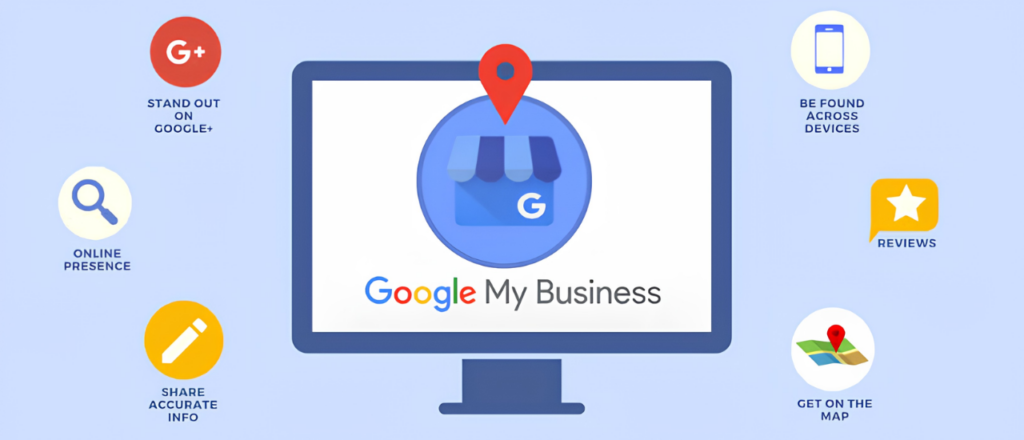
Google Business Profile (GBP) Optimization: Claiming and fully optimizing your free Google Business listing is the single most important step in local SEO. It determines how your business appears in Google Maps and the local pack results.
NAP Consistency: Your Name, Address, and Phone number must be identical across every online directory, listing, and social profile. Inconsistencies confuse search engines and harm local rankings.
Local Citations: Listings on platforms like Justdial, Sulekha, IndiaMart, Yellow Pages, and industry-specific directories confirm your business’s existence and location to search engines.
Online Reviews: Positive customer reviews on Google significantly influence local rankings. Actively encourage satisfied customers to leave reviews and respond to all reviews professionally.
Geo-Targeted Keywords: Incorporating city- and locality-specific keywords throughout your website content (e.g., “digital marketing agency in Jaipur”).
Local Backlinks: Earning links from local newspapers, community websites, chambers of commerce, and regional blogs.
Location Pages: Dedicated landing pages for each city or area you serve, optimized with local content and keywords.
Mobile Optimization: Most local searches happen on mobile. A fast, mobile-friendly site is critical for capturing local searchers.
Benefits of Local SEO
Higher visibility in Google Maps and local search results.
More foot traffic to your physical location.
Increased calls, direction requests, and enquiries from nearby customers.
Stronger trust through positive reviews and local credibility signals.
5. E-Commerce SEO
E-Commerce SEO is the practice of optimizing online stores to improve their visibility in search engine results and drive purchase-ready traffic directly to product and category pages. It is one of the highest-ROI SEO investments for businesses selling products online.
Key Elements of E-Commerce SEO
Keyword Research: Identifying high-intent product and category keywords that potential buyers are searching for (e.g., “buy leather wallet online” or “best running shoes under ₹3000”).
Category Page SEO: Category pages often drive the highest-volume commercial traffic. They need optimized headings, introductory text, and internal links to products.
On-Page SEO for Every Page: Unique meta titles, meta descriptions, header tags, and image alt text for every product and category page.
User-Friendly URLs: Clean, keyword-inclusive URLs like /mens-leather-wallet/ instead of /product?id=4821.
Site Architecture: Ensuring every product is reachable within 3 clicks from the homepage to preserve crawl budget and user experience.
Product Schema Markup: Structured data that enables rich snippets showing price, availability, and ratings directly in search results, significantly boosting CTR.
Mobile Optimization: The majority of online shopping now happens on smartphones. A seamless mobile shopping experience is critical for both rankings and conversions.
Higher visibility for commercial and transactional search queries.
Increased organic traffic from buyers actively searching for your products.
Better product discoverability leading to more sales.
Reduced dependence on paid advertising over time.
6. Video SEO
Video SEO involves optimizing video content to improve its ranking and visibility in both Google’s main search results and on YouTube. With video consumption growing exponentially, Video SEO has become a critical component of any complete digital marketing strategy.
Key Elements of Video SEO
Keyword Research: Identifying keywords that users search for in video format, especially tutorials, reviews, and how-to queries, where Google frequently surfaces video results.
Video Title: A compelling, keyword-rich title that accurately represents the video’s content and encourages clicks.
Video Description: A detailed description including relevant keywords, timestamps, and links to relevant pages on your website.
Tags: Descriptive tags that help YouTube and Google understand the context and topic of your video.
Thumbnail Optimization: Custom, high-quality thumbnails dramatically improve click-through rates. Thumbnails are often the first thing potential viewers notice.
Transcripts & Closed Captions: Accurate transcripts make your video content crawlable by search engines and improve accessibility for all viewers.
Video Schema Markup: Structured data that enables your videos to appear as rich results in Google with a thumbnail, title, and duration.
Watch Time & Engagement: YouTube’s algorithm heavily rewards videos with high average watch time, likes, comments, and shares. Great content earns great rankings.
Benefits of Video SEO
Visibility in both Google Search and YouTube simultaneously.
Increased reach and brand exposure to a wider audience.
Improved engagement and time spent with your brand.
Higher conversion rates, as video builds trust faster than text alone.
7. Image SEO
Image SEO makes your visual content discoverable in Google Image Search and enhances the overall SEO performance of your web pages. It is a frequently overlooked type of SEO that can drive a significant volume of additional organic traffic.
Key Elements of Image SEO
Descriptive File Names: Rename image files from generic names like “IMG_4532.jpg” to descriptive names like “blue-leather-wallet-for-men.jpg” before uploading.
Image Alt Text: A written description of the image that helps search engines understand its content and serves as accessibility text for visually impaired users.
Image Size & Compression: Large image files slow down your website. Use modern formats like WebP and compression tools to reduce file size without sacrificing visible quality.
Image Format Selection: Use JPEG for photographs, PNG for graphics with transparency, and WebP for a balance of high quality and small file size.
Responsive Images: Images should automatically adapt to different screen sizes using proper HTML srcset attributes.
Image Sitemap: A dedicated sitemap listing all your images helps Google discover and index them, especially when they are loaded via JavaScript.
Contextual Relevance: Surround images with related text content that reinforces the subject matter of the image.
Benefits of Image SEO
Additional traffic from Google Image Search.
Improved page load speed through proper compression.
Better accessibility for all users.
Enhanced user experience that keeps visitors engaged longer.
8. International SEO
International SEO is the process of optimizing your website to rank in multiple countries and languages. It ensures that the correct version of your content is served to users based on their geographic location and language preference, making your brand globally accessible.
Key Elements of International SEO
Hreflang Tags: HTML attributes that explicitly tell Google which language and country a specific page targets. This prevents duplicate content issues between multilingual or multi-regional versions of your site.
Country Code Top-Level Domains (ccTLDs): Using country-specific extensions like .in, .uk, or .de to signal relevance to a particular country.
Subdirectories vs Subdomains: Organizing international content using subdirectories (example.com/in/) or subdomains (in.example.com), each with different SEO implications.
Localized Content: Not just translated, but culturally adapted content that resonates with the target audience’s language nuances, values, and preferences.
Geotargeting in Google Search Console: Manually setting your target country for each version of your site.
International Link Building: Acquiring backlinks from websites in the target country strengthens your authority in local SERPs.
Currency, Pricing & Local Compliance: Showing prices in local currency and ensuring your site meets regional legal requirements builds trust with international audiences.
Benefits of International SEO
Access to new international markets and revenue streams.
Serving the right content to the right audience in the right language.
Reduced bounce rates from international visitors.
Competitive rankings in country-specific search results.
9. Voice Search SEO
Voice Search involves optimizing your content and website structure to appear in spoken search results delivered by voice assistants like Google Assistant, Siri, Alexa, and Cortana. Speak searches are fundamentally different from typed queries; they are longer, more conversational, and usually phrased as complete questions.
Key Elements of Voice Search SEO
Natural Language Keywords: Optimize for the way people actually speak. Instead of “best SEO agency Jaipur,” voice users say, “What is the best SEO agency in Jaipur?”
Featured Snippet Optimization: Most voice answers are pulled directly from Google’s featured snippets (Position Zero). Structure your content to directly and concisely answer common questions.
FAQ Pages: FAQ content mirrors the way people ask questions verbally, making it highly effective for capturing voice search traffic.
Local Optimization: A large proportion of voice searches have local intent (“near me” queries). Keeping your local SEO strong directly benefits voice search visibility.
Conversational Content: Write in a natural, direct tone that answers specific questions clearly and concisely, ideally in 40–60 words per answer.
Page Speed: Voice search results are almost exclusively drawn from fast-loading, mobile-optimized pages.
User Intent Understanding: Optimize for informational (“What is…”), navigational (“How do I get to…”), and transactional (“Where can I buy…”) voice queries based on your business goals.
Benefits of Voice Search SEO
Visibility on voice-activated devices and smart speakers.
Capturing local customers who use voice search while on the move.
Featured in zero-click answer results in Google.
Early-mover advantage in a rapidly growing search behavior.
10. YouTube SEO
YouTube SEO is the process of optimizing your videos and channel to rank higher in YouTube’s own search results and in Google’s video results. With over 2 billion logged-in users per month, YouTube is the world’s second-largest search engine, making YouTube SEO a massive opportunity.
Key Elements of YouTube SEO
Keyword Research: Using YouTube’s search suggestions, Google Keyword Planner, and tools like TubeBuddy or VidIQ to identify keywords that your target audience is searching for on YouTube.
Video Title: A compelling, keyword-rich title that accurately describes the video and motivates people to click.
Video Description: A detailed description (up to 5,000 characters) that includes keywords naturally, provides context, and includes timestamps and links to your website.
Tags: Relevant tags that help YouTube categorize your video and surface it in related video recommendations.
Thumbnail Optimization: A custom thumbnail with bold text and strong visuals dramatically increases click-through rates, one of YouTube’s primary ranking signals.
Transcripts & Closed Captions: Providing accurate captions improves accessibility and helps YouTube fully understand the content of your video for search indexing.
Watch Time & Engagement: YouTube’s algorithm prioritizes videos that keep viewers watching. Engagement signals like likes, comments, shares, and saves directly impact rankings.
Playlists: Organizing videos into playlists increases session watch time, which boosts your channel’s overall authority.
Benefits of YouTube SEO
Increased visibility and views from both YouTube and Google Search.
Higher subscriber growth as more people discover your channel.
Stronger brand authority through consistent video presence.
Additional monetization opportunities through YouTube’s Partner Program.
11. Social SEO
Social SEO is the strategic practice of optimizing your social media profiles and content to strengthen your overall search engine visibility. While social signals like likes and shares are not direct ranking factors in Google’s algorithm, social media activity indirectly influences SEO in several powerful ways.
Key Elements of Social SEO
Social Signals: High engagement (shares, comments, likes) amplifies content reach, attracts more eyes, and increases the likelihood of earning backlinks, which directly influence rankings.
Brand Visibility & Authority: Active, optimized social profiles build brand recognition. Higher brand searches (people searching your brand name directly) are a positive trust signal to Google.
Link Building Through Social: When your content is widely shared on social media, it gets discovered by bloggers, journalists, and website owners who may then link to it.
Social Profiles in SERPs: Your social media profiles, LinkedIn, Instagram, Twitter, and Facebook often appear on the first page of results when someone searches for your brand name, giving you more control over your brand presence.
Content Distribution: Social media is the fastest channel to amplify newly published content, accelerating the process of attracting traffic and links.
Local SEO Reinforcement: Consistent business information on social platforms (especially Facebook and Instagram) reinforces your NAP signals and supports local SEO.
Benefits of Social SEO
Broader content reach and faster discovery by new audiences.
Indirect improvement in backlink acquisition and domain authority.
Greater control over your brand’s first-page presence in search results.
Stronger customer relationships that drive repeat visits and referrals.
12. Content SEO
Content SEO is the practice of creating, structuring, and optimizing web content to rank well in search engines while genuinely satisfying user needs. It is where strategy meets storytelling, and it is the engine that powers every other type of SEO.
Key Elements of Content SEO
Keyword Research: Identifying the specific words and phrases your target audience uses to find information, products, or services related to your business.
Search Intent Alignment: Understanding whether users want to learn (informational), compare (commercial), navigate (navigational), or buy (transactional), and creating content that matches that intent precisely.
Quality & Relevance: High-quality content that is genuinely useful, well-researched, accurate, and more comprehensive than what competitors have published.
Keyword Placement: Using target keywords naturally in titles, headings, the opening paragraph, and throughout the body without keyword stuffing.
Content Structure: Using clear H1, H2, and H3 headings, short paragraphs, bullet points, and visual breaks to make content easy to read and scan.
Topic Clusters & Pillar Pages: Building comprehensive “hub” pages on broad topics supported by detailed “spoke” articles on subtopics, establishing deep topical authority.
Meta Tags: Compelling meta titles and descriptions for every page that drive clicks from search results.
URL Optimization: Clean, keyword-rich URLs that clearly communicate the page topic to both users and search engines.
E-E-A-T (Experience, Expertise, Authoritativeness, Trustworthiness): Google’s quality framework that rewards content produced by genuine experts with demonstrated credibility.
Content Freshness: Regularly updating older articles with new information, statistics, and insights to maintain and grow rankings over time.
Benefits of Content SEO
Sustained organic traffic growth through evergreen content.
Improved brand authority and perceived expertise in your industry.
Higher engagement, lower bounce rates, and better conversion rates.
The foundation upon which all other SEO types are built and amplified.
13. Mobile SEO
Mobile SEO ensures that your website delivers an excellent experience on smartphones and tablets. Since Google adopted mobile-first indexing, your mobile site is the primary version Google evaluates when determining your rankings, making mobile SEO not optional, but essential.
Key Elements of Mobile SEO
Responsive Web Design: Your website automatically adapts its layout and content to fit any screen size, from desktop monitors to small smartphones.
Mobile Page Speed: Pages must load in under 3 seconds on mobile networks. Even a 1-second delay in page load time can reduce conversions significantly.
Touch-Friendly UI: Buttons must be large enough to tap accurately, navigation must be thumb-friendly, and forms must be easy to complete on a mobile keyboard.
Avoiding Intrusive Interstitials: Google penalizes pages where large pop-ups block content immediately on mobile, degrading the user experience.
Viewport Configuration: Proper meta viewport tags ensure your content renders correctly across all device sizes and resolutions.
Core Web Vitals on Mobile: Google separately assesses Core Web Vitals scores for mobile and desktop. Mobile scores must meet Google’s “Good” threshold for ranking eligibility.
AMP (Accelerated Mobile Pages): A framework for creating ultra-fast mobile pages, particularly relevant for news publishers and content-heavy websites.
Benefits of Mobile SEO
Compliance with Google’s mobile-first indexing requirements.
Better user experience for the majority of web users who browse on mobile.
Lower bounce rates and higher engagement from mobile visitors.
Improved rankings across both mobile and desktop search results.
14. Programmatic SEO
Programmatic SEO involves using templates and structured data to automatically generate large volumes of targeted, optimized landing pages at scale. It allows brands to capture thousands of long-tail keyword opportunities that would be impossible to address through manual content creation.
Key Elements of Programmatic SEO
Template-Based Page Generation: A single master template is combined with unique data sets to produce thousands of distinct pages (e.g., “Best Hotels in [City]” or “SEO Services in [Location]”).
Database-Driven Content: Pulling structured data from spreadsheets, APIs, or databases to dynamically populate page content, ensuring accuracy and consistency.
Unique Value on Every Page: Each generated page must offer something genuinely useful and distinct to avoid Google’s thin content and duplicate content penalties.
Internal Linking at Scale: Automated cross-linking structures that distribute link authority across thousands of pages and improve crawlability.
Canonicalization: Implementing canonical tags carefully to prevent duplicate content issues when many pages share structural similarities.
Quality Control Processes: Human review and editorial standards applied to templates ensure the generated content meets E-E-A-T guidelines.
Real-world examples: Platforms like Zomato, Naukri, Tripadvisor, and MakeMyTrip rely heavily on programmatic SEO to rank across millions of city- and category-specific queries.
Benefits of Programmatic SEO
Massive organic traffic capture at a fraction of the manual content cost.
Dominance of long-tail keyword segments in your niche.
Scalable growth without proportional increases in content team size.
Compounding traffic as each new page adds to your organic footprint.
15. AI SEO The New Frontier (GEO & LLMO)
AI SEO, also known as Generative Engine Optimization (GEO) or Large Language Model Optimization (LLMO), is the fastest-growing and most consequential new type of SEO. It refers to optimizing your content and brand presence to be cited, referenced, and recommended by AI-powered search experiences, including Google’s AI Overviews, ChatGPT Search, Perplexity AI, Claude, and Microsoft Copilot.
As AI tools increasingly answer search queries directly without users clicking on a link, traditional SEO must evolve. Brands that do not appear in AI-generated answers risk becoming invisible to a growing and highly valuable segment of searchers.
Key Elements of AI SEO
Topical Authority Building: AI models favor brands that are recognized as deep experts on a specific subject. Build comprehensive content ecosystems around your core topics rather than isolated articles.
Clear, Structured Answers: AI systems extract answers from well-organized, direct content. Use clear headings, concise definitions, numbered steps, and bullet points that AI can cleanly pull from.
Entity Optimization: Establish a clear, consistent digital identity for your brand name, offerings, people, and areas of expertise across your website and across the web so AI models can confidently identify who you are.
Third-Party Mentions & Citations: AI models are trained on the broader web. The more authoritative websites reference your brand, the more likely AI will recognize and cite you as a credible source.
Structured Data (Schema Markup): Helps AI systems understand the precise meaning and context of your content, whether it is a product, article, FAQ, review, or organization.
E-E-A-T Signals: Demonstrating real-world Experience, Expertise, Authoritativeness, and Trustworthiness is the most critical factor in being selected as an AI citation source.
Factual Accuracy & Source Attribution: AI models favor content that cites credible data, statistics, and original research. Always back claims with verifiable sources.
Conversational Content Format: Write content that directly answers questions in clear, natural language, the same format AI models use to generate their responses.
Sub-Types of AI SEO
A. AI Content Optimization: Using AI-powered tools like Surfer SEO, Clearscope, and MarketMuse to analyze top-ranking competitors, identify semantic content gaps, and ensure your content covers every relevant subtopic search engines expect to see on a given subject.
B. Predictive SEO: Leveraging machine learning to identify trending keywords and rising topics before they peak in search volume, allowing brands to publish optimized content first and capture traffic before competitors even identify the opportunity.
C. AI in Technical SEO: Automating site audits, predicting the SEO impact of planned changes, identifying crawl anomalies at scale, and prioritizing technical fixes by estimated ranking impact, making technical SEO faster and more precise than ever before.
Benefits of AI SEO
Visibility in AI-generated answers where traditional blue links do not appear.
Positioning your brand as the go-to authority cited by AI tools.
Future-proofing your SEO strategy against ongoing AI disruption in search.
Compounding authority as AI citations drive brand searches and backlinks.
Conclusion
Understanding all types of SEO is essential for any brand serious about long-term digital growth. Each type of SEO plays a distinct and complementary role, from the foundational optimization of individual pages through On-Page SEO, to the cutting-edge science of being cited by AI models through GEO and LLMO. The most successful brands do not choose between these types; they build an integrated SEO strategy that leverages each one appropriately. At The Digitor, we help businesses in Jaipur and across India develop comprehensive, Customized SEO Services that drive real results.
Frequently Asked Questions (FAQs)
Q1. What is SEO, and why is it important?
SEO (Search Engine Optimization) improves your website’s visibility in organic search results so potential customers can find you. It’s important because most online journeys start with a search engine, and top results get the majority of clicks. Unlike ads, SEO delivers long-term, compounding traffic and is one of the highest-ROI digital marketing strategies.
Q2. How long does SEO take to show results?
SEO typically shows initial results in 3–6 months, with stronger growth in 6–12 months. Timelines depend on competition, website health, content quality, and backlinks. Highly competitive industries may take up to 12–18 months.
Q3. Difference between On-Page, Off-Page, and Technical SEO?
On-Page SEO: Optimizing content, keywords, meta tags, and internal links on your website.
Off-Page SEO: Building authority through backlinks, brand mentions, and external signals.
Technical SEO: Improving site performance, speed, mobile-friendliness, and crawlability.
Q4. What is AI SEO and why is it important in 2025?
AI SEO focuses on getting your content featured in AI-generated answers (like Google AI Overviews, ChatGPT, etc.). As users rely more on AI responses instead of clicking links, being cited by these systems is critical for visibility and authority.
Q5. Which type of SEO does my business need?
It depends on your business:
Local businesses: Local SEO
E-commerce: Product & technical SEO
Global audience: International SEO
Video-focused: Video SEO
Large websites: Technical & programmatic SEO
Most businesses need a mix of all core SEO types, tailored to their goals.