The world of search engine optimization has never stood still. From the early days of keyword stuffing and link farms to the era of content marketing and technical audits, SEO has constantly evolved in response to how search engines get smarter. Today, we are in the middle of the biggest shift the industry has ever seen: the rise of Artificial Intelligence in SEO.
AI SEO is not just a buzzword. It is a fundamental transformation in how businesses research, create, optimize, and measure their presence in search engines. If you are a business owner, marketer, or digital agency trying to stay ahead of the curve, understanding AI SEO is no longer optional; it is essential.
In this detailed guide by The Digitor, we will break down exactly what AI SEO is, how it works, the ways it is reshaping the SEO landscape, and how you can use it to grow your business in 2026 and beyond.
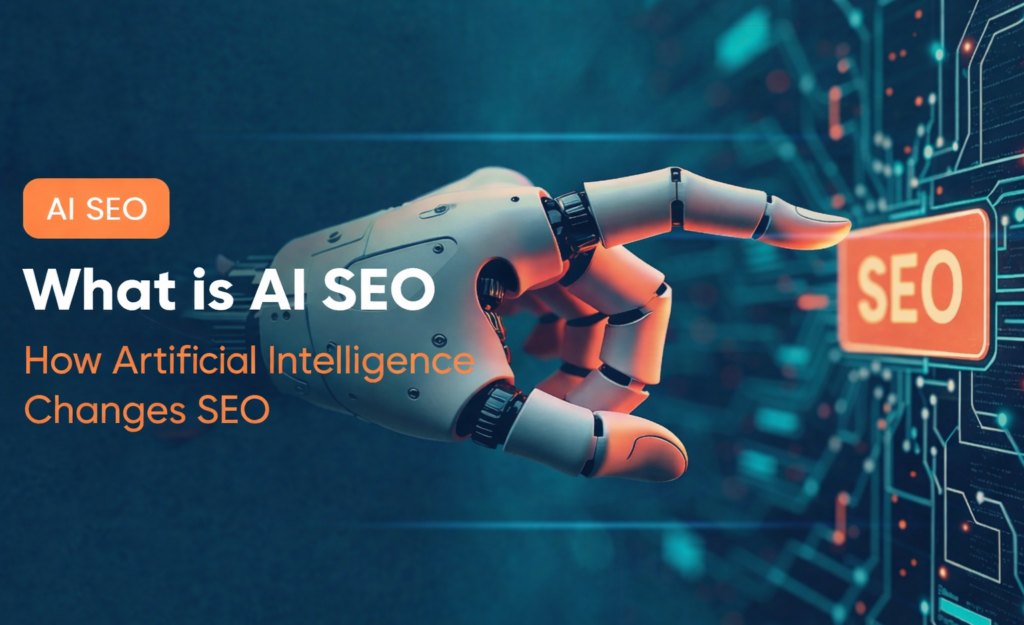
AI SEO refers to the application of artificial intelligence technologies, including machine learning, natural language processing (NLP), deep learning, and predictive analytics, to improve and automate search engine optimization activities.
In traditional SEO, every task from keyword research to content planning to technical auditing was done manually by human experts. It was time-consuming, resource-heavy, and often reactive, meaning businesses would discover problems or opportunities only after they had already played out in the rankings.
AI SEO changes this equation entirely. AI-powered tools can process and analyze millions of data points simultaneously, crawling competitor websites, interpreting search patterns, analyzing top-ranking content, and predicting algorithm behavior in a fraction of the time it would take a team of humans. The result is faster, more accurate, and more scalable SEO execution.
It is important to understand what AI SEO is not. It is not about using AI to produce low-quality, spammy content and flood the internet with it. The businesses that approach AI SEO that way are ultimately penalized by search engines. True AI SEO is about using intelligent tools to do legitimate SEO work better, faster, and at a greater scale.
Before we explore how marketers use AI for SEO, it helps to understand that search engines like Google have been powered by AI for years. The way Google ranks content is itself an AI-driven process, and understanding it is foundational to any modern SEO strategy.
Google RankBrain was introduced in 2015 and was Google’s first major machine learning component. RankBrain helps Google interpret search queries it has never seen before, particularly long, complex, or ambiguous queries, by understanding the relationships between words and concepts rather than just matching keywords literally.
BERT (Bidirectional Encoder Representations from Transformers) was rolled out in 2019 and represented an even bigger leap. BERT allows Google to understand the full context of a search query by reading it in both directions simultaneously, meaning it grasps nuance, intent, and the role of every word in a sentence, rather than just the prominent keywords.
MUM (Multitask Unified Model) went further still, enabling Google to process and understand information across multiple formats, text, images, and potentially video simultaneously and across multiple languages. MUM allows Google to answer deeply complex questions that previously required multiple searches to resolve.
Google SGE (Search Generative Experience) is the latest and most disruptive development. Instead of simply listing ten blue links, Google now generates synthesized, AI-written answers directly at the top of the search results page, drawing from multiple sources and presenting a consolidated response. This is reshaping the entire concept of what it means to rank on Google.

Traditional keyword research involved pulling data from tools like Google Keyword Planner, manually sorting through volumes and competition scores, and making educated guesses about which terms to target. The process was slow and often missed important opportunities hidden in the long tail.
AI-powered keyword research tools fundamentally change this. They analyze search patterns across millions of queries, identify semantic relationships between keywords, cluster related terms into topical groups, surface rising trends before they become competitive, and map keywords to the precise intent behind them, whether informational, navigational, commercial, or transactional.
Tools like Semrush, Ahrefs, and Surfer SEO now use AI to build comprehensive keyword maps that support holistic topical authority rather than isolated page rankings. This means instead of targeting one keyword per page, businesses can build interconnected content ecosystems that rank across hundreds of related terms simultaneously.
One of the most visible impacts of AI on SEO is in content creation. AI writing tools like ChatGPT, Claude, Jasper, and others can generate first drafts, suggest outlines, expand on ideas, and produce variations of headlines and meta descriptions at remarkable speed.
But AI’s role in content goes beyond generation. AI content optimization tools analyze the top-ranking pages for any target keyword and identify exactly what topics, subtopics, headings, entities, and semantic terms those pages cover. They produce a content brief that, when followed, makes it far more likely your page will rank because it covers the subject with the depth and breadth that Google’s AI systems reward.
Tools like Clearscope, Surfer SEO, and Frase score your content in real time as you write, telling you whether you have covered the topic thoroughly enough and where the gaps are compared to top competitors. This removes much of the guesswork from on-page optimization.
Critically, AI does not replace the human expert in content creation. It accelerates research, reduces blank-page paralysis, and ensures comprehensive topic coverage, but the strategy, brand voice, original insights, and editorial judgment must still come from skilled humans. Google continues to reward E-E-A-T (Experience, Expertise, Authoritativeness, Trustworthiness), which is a fundamentally human quality.
Technical SEO, ensuring that a website is correctly crawled, indexed, and rendered by search engines, has always been one of the most complex and resource-intensive areas of SEO. For large websites with thousands or even millions of pages, manual technical auditing is simply not feasible.
AI-powered crawling and auditing tools can now scan entire websites continuously, identifying and prioritizing issues by their potential impact on rankings. They can detect broken internal links, duplicate content, thin pages, slow-loading assets, crawl budget waste, incorrect canonical tags, structured data errors, and much more, then rank these issues by urgency so teams can focus their effort where it matters most.
AI can also help with log file analysis, interpreting how Googlebot is actually crawling a site versus how it should be crawling it, revealing crawl inefficiencies that would be nearly impossible to spot manually in large datasets.
Search intent what a user actually wants to accomplish when they type a query, is the single most important factor in modern SEO. Google’s AI systems are extraordinarily good at identifying intent and penalizing pages that do not match it, even if those pages are otherwise well-optimized.
AI tools help SEO professionals analyze the intent behind any keyword at scale, categorizing queries and flagging when existing content is misaligned with what searchers actually want. For example, if a page targets a keyword where users want a quick factual answer but the page is a 3,000-word opinion piece, AI analysis can identify this mismatch and recommend corrective action.
This kind of intent alignment work, done manually across thousands of keywords, would be enormously time-consuming. AI makes it systematic.
One of the most powerful advantages AI brings to SEO is the ability to predict rather than react. Traditional SEO is largely reactive; you notice a ranking drop and investigate, or you discover a keyword trend after it has already peaked. AI changes this by identifying patterns in historical data that signal what is coming.
AI tools can forecast which topics are likely to trend in your industry in the coming months, which keywords are on an upward trajectory and worth targeting now before competition increases, and which algorithm changes are likely based on patterns in Google’s historical update behavior. This allows businesses to create content proactively, establishing authority on topics before the wave of competition arrives.
SEO reporting has traditionally been a manual, time-consuming process involving pulling data from multiple sources, building spreadsheets, and creating reports that are often outdated by the time they are delivered.
AI-powered analytics platforms can now integrate data from Google Search Console, Google Analytics, third-party rank trackers, and backlink databases simultaneously, synthesizing this information into intelligent dashboards that automatically surface the most important insights. Rather than presenting raw data and leaving analysis to the human, AI platforms highlight what has changed, why it likely changed, what the impact is, and what actions are recommended.
This frees SEO teams to focus on strategy and execution rather than data compilation.
Backlinks remain one of the strongest ranking signals in Google’s algorithm, but link building is also one of the most time-consuming and difficult SEO activities. AI is making it significantly more efficient in several ways.
AI tools can analyze a competitor’s backlink profile at scale, identifying which sites are linking to them but not to you — a direct roadmap of outreach opportunities. They can evaluate the quality, relevance, topical authority, and trustworthiness of thousands of potential link prospects in seconds, saving teams from hours of manual vetting. They can also identify toxic or spammy links pointing to your own site that may be harming your authority.
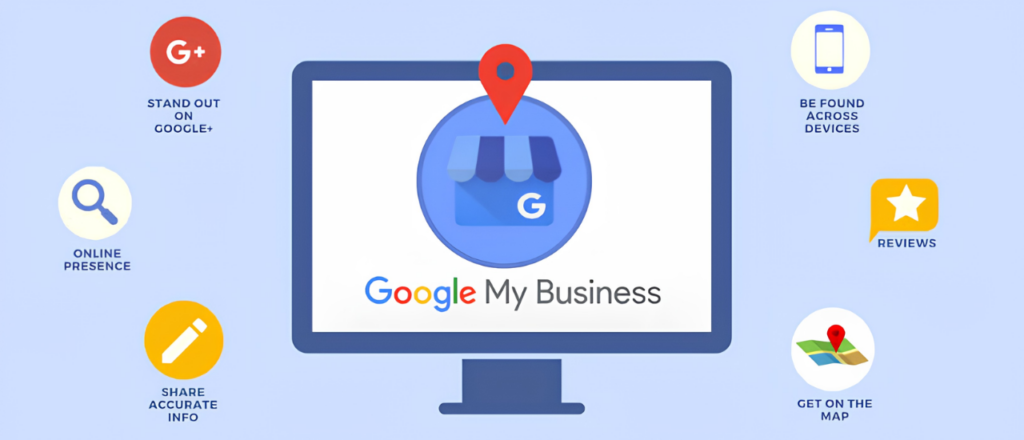
AI has dramatically improved the precision of local search. Google’s local ranking algorithms use machine learning to understand proximity, relevance, and prominence for any given searcher in real time. AI-powered local SEO tools help businesses optimize their Google Business Profile, manage reviews, track local ranking fluctuations, and analyze competitor positioning at the hyperlocal level.
Beyond local search, AI enables broader personalization, delivering different content experiences based on a user’s location, device, browsing history, and demonstrated intent. These personalized experiences improve on-page engagement metrics like time on site, pages per session, and scroll depth, which in turn feed positive signals back to search engines.
| Area | Traditional SEO | AI-Powered SEO |
|---|---|---|
| Keyword Research | Manual, slow, intuition-based | Automated, semantic, intent-mapped |
| Content Creation | Human-only, slow to scale | AI-assisted, faster with human oversight |
| Technical Audits | Periodic, manual | Continuous, automated, prioritized |
| Competitor Analysis | Snapshot-based | Real-time, predictive |
| Reporting | Manual spreadsheets | Automated intelligence dashboards |
| Scalability | Limited by team size | Near-infinite at reduced cost |
| Intent Analysis | Often guesswork | Data-driven, systematic |
| Trend Forecasting | Reactive | Predictive |
Google’s Search Generative Experience (SGE) and competing AI search platforms like Perplexity AI, Bing Copilot, and others are creating a new paradigm for organic visibility. When AI generates a synthesized answer at the top of the search results, users may get their answer without clicking any link at all, a phenomenon known as zero-click search.
This has significant implications for organic traffic. For informational queries, especially, traditional blue-link rankings may drive less traffic even when maintained. The businesses that win in this new environment are those that are cited as sources within the AI-generated answers themselves.
To be cited by AI search engines, your content needs to demonstrate genuine expertise and authority, be structured clearly with direct answers to specific questions, use schema markup that helps AI understand your content’s context, earn trust signals like citations from other reputable sources, and cover topics comprehensively enough to be considered a definitive resource.
This is exactly the kind of long-term, authority-building SEO that The Digitor specializes in.

Investing in an AI-powered SEO strategy delivers advantages that compound over time. The most significant benefits include dramatically reduced time spent on manual research and reporting tasks, enabling your team to focus on strategy and creative work. Content production quality and volume both improve, as AI-assisted research ensures comprehensive topic coverage while maintaining human editorial standards.
Technical issues are identified and resolved faster, meaning your site spends less time with problems that suppress crawling and indexing. Competitor intelligence becomes continuous rather than periodic, so you are never caught off guard by a rival’s new content or backlink campaign. Reporting becomes more insightful and actionable, making it easier to demonstrate the value of SEO investment to stakeholders.
Perhaps most importantly, AI SEO scales in a way that traditional SEO cannot. A small team equipped with the right AI tools can execute at a level that previously required a much larger operation.
Surfer SEO is widely used for on-page optimization, providing real-time content scoring and NLP-based suggestions based on what top-ranking pages cover for any given keyword.
Semrush has deeply integrated AI across its platform, from keyword clustering and content brief generation to competitive gap analysis and traffic prediction.
Ahrefs uses machine learning in its keyword difficulty scoring, content gap tools, and backlink quality evaluation.
Clearscope excels at ensuring content covers the full semantic depth of a topic, with grading that correlates strongly with ranking performance.
Frase combines AI research and writing assistance to help teams produce well-structured, intent-aligned content briefs and drafts efficiently.
Alli AI focuses on technical SEO automation, enabling bulk on-page changes to be deployed across large websites without constant developer involvement.
If you are new to AI SEO, the most effective approach is to start with the areas where AI delivers the most immediate value. Begin with a comprehensive AI-powered technical audit of your existing website to identify and resolve any foundational issues that are suppressing your current rankings. Next, conduct AI-assisted keyword research to build a comprehensive topical map of the subjects you should cover, prioritized by search volume, intent, and competitive opportunity.
Use AI content optimization tools to update your existing content before creating anything new. Improving pages that already have some authority is often faster and more impactful than starting from scratch. Establish an AI-powered reporting setup, so you have continuous visibility into your rankings, traffic, and technical health. Then build a systematic AI-assisted content production process, ensuring every new piece of content is strategically planned, intent-aligned, and optimized before it is published.
Q1. Is AI SEO replacing traditional SEO entirely?
No, and this is one of the most common misconceptions in the industry. AI SEO enhances and accelerates traditional SEO; it does not replace its core principles. The fundamentals of SEO remain unchanged: create genuinely valuable content, earn authoritative backlinks from relevant sources, provide an excellent user experience, and maintain a technically sound website. What AI does is make executing these fundamentals faster, more data-driven, and more scalable. Human strategy, creativity, domain expertise, and editorial judgment remain essential.
Q2. Will Google penalize content created with AI writing tools?
Google’s official position is clear: it rewards high-quality, helpful content regardless of how it was produced, and it penalizes low-quality, spammy, or automatically generated content that provides no genuine value to users. The method of production is not the issue; the quality of the output is. The problem arises when AI is used to mass-produce shallow, unedited, generic content purely for the purpose of manipulating rankings. At The Digitor, every piece of content, whether AI-assisted or not, goes through rigorous expert review to ensure it meets the highest standards of accuracy, depth, and usefulness.
Q3. How long does it take to see results from an AI SEO strategy?
SEO results take time regardless of whether AI is involved, because search engines need time to discover, crawl, index, and evaluate changes to your site and content. Generally speaking, technical fixes can show improvements in crawl coverage and indexing within a few weeks. On-page optimizations of existing content often produce ranking improvements within one to three months. New content targeting competitive keywords typically requires six to twelve months to reach its ranking potential as it builds authority and earns links over time.
Q4. What is the difference between AI SEO and traditional keyword research?
Traditional keyword research typically involves entering seed terms into a tool like Google Keyword Planner, reviewing search volume and competition data, and selecting individual target keywords based on a combination of data and intuition. It produces a relatively flat list of keywords that are then assigned to individual pages.
AI-powered keyword research is a fundamentally different process. Rather than producing a list of isolated keywords, AI tools analyze the semantic relationships between thousands of related terms, identifying how topics cluster together and which subtopics need to be covered to establish genuine authority on a subject.
AI is not the future of SEO; it is the present. Search engines are already AI systems, and the businesses that understand this and adapt their strategies accordingly are the ones gaining ground while others fall behind.
AI SEO does not mean handing your strategy to a machine. It means equipping your team or your agency partner with intelligent tools that make research faster, content smarter, technical execution more consistent, and reporting more insightful. The human expertise, strategic thinking, and brand understanding that drive truly effective SEO remain irreplaceable.
At The Digitor, we believe in combining the best of both worlds: deep human SEO expertise powered by the best AI tools available. Whether you are starting from scratch or looking to take your existing SEO to the next level, we are here to build a strategy that delivers lasting, measurable results.